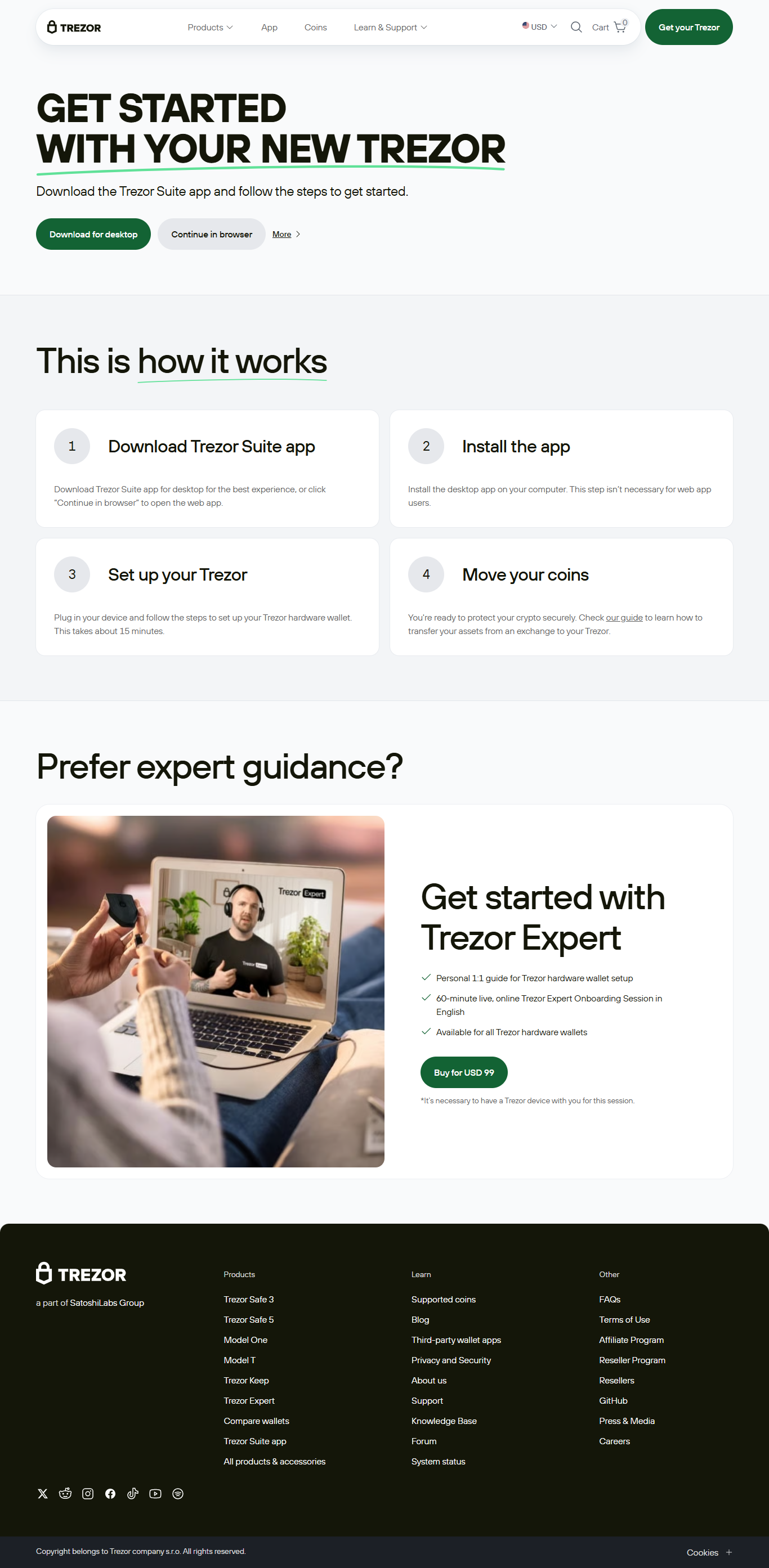
Trézor Bridge® | Introducing the New Trezor® App
Trézor Bridge® has long been a foundational component of the Trezor® ecosystem, enabling secure communication between Trezor hardware wallets and web-based applications. With the introduction of the new Trezor® App — Trezor Suite, users now benefit from a more unified, secure, and modern way to manage digital assets.
This evolution reflects Trezor’s ongoing commitment to security, usability, and privacy-first design, while maintaining backward compatibility for users who still rely on browser-based access through Trezor Bridge.
Understanding Trézor Bridge® in the Trezor Ecosystem
Trézor Bridge® is lightweight background software that allows web applications to communicate securely with a Trezor hardware wallet. Because modern browsers restrict direct USB access for security reasons, Trezor Bridge acts as a trusted intermediary.
It enables communication between:
Trezor hardware wallets
Supported web interfaces
The Trezor Suite Web environment
Importantly, Trezor Bridge never accesses private keys. All cryptographic operations remain isolated inside the hardware device.
Suggested internal link:
How Trezor Hardware Wallets Work
Introducing the New Trezor® App: Trezor Suite
The new Trezor® App, officially known as Trezor Suite, represents a major step forward from earlier browser-based wallet experiences. It consolidates asset management, privacy tools, and security features into a single, streamlined application.
Trezor Suite is available as:
Desktop App (Windows, macOS, Linux)
Web App (browser-based, requires Trezor Bridge)
This new app reduces dependency on browser extensions while offering a more robust and controlled environment.
Suggested internal link:
What Is Trezor Suite App?
How Trézor Bridge® Fits Into the New Trezor App Experience
While the Trezor Suite Desktop App does not require Trézor Bridge®, the bridge remains essential for users who choose web-based access.
When Trézor Bridge® Is Used
Accessing Trezor Suite Web
Using supported third-party web wallets
Interacting with browser-based crypto services
When Trézor Bridge® Is Not Needed
Using Trezor Suite Desktop App
This flexible model allows users to choose between maximum security (desktop) and maximum convenience (web) without compromising private key protection.
Suggested internal link:
Trezor Suite Desktop vs Web Comparison
Security Architecture: Bridge + New Trezor App
The combination of Trézor Bridge® and the new Trezor® App is built on layered security principles:
Hardware-Isolated Private Keys
Private keys never leave the Trezor device, regardless of whether you use the desktop or web app.
On-Device Confirmation
All transactions must be physically confirmed on the hardware wallet screen.
Verified Communication
Trezor Bridge ensures that only trusted applications can send commands to the device.
Open-Source Transparency
Both Trezor Bridge and Trezor Suite are open-source, allowing public audits and continuous security review.
Suggested internal link:
How Trezor Protects Private Keys
Supported Devices and Platforms
Compatible Trezor® Devices
Trezor Model One
Trezor Model T
Supported Operating Systems
Windows
macOS
Linux
Trézor Bridge® installs once and runs quietly in the background, enabling instant detection of the device in supported browsers.
Installing Trézor Bridge® for the New Trezor App (Web)
To use the new Trezor App (Web), Trézor Bridge® must be installed from official sources only.
Installation Steps
Visit trezor.io/start
Choose the web version of Trezor Suite
Download Trézor Bridge® when prompted
Install and allow background permissions
Connect your Trezor device
Once installed, your browser can securely communicate with the hardware wallet.
⚠️ Never download Trezor Bridge from third-party websites.
Suggested internal link:
How to Download Official Trezor Software Safely
Benefits of the New Trezor® App Over Legacy Wallets
The new Trezor App improves on older browser-wallet experiences by offering:
Unified portfolio dashboard
Built-in buy, sell, and exchange options
Advanced privacy tools (Tor, coin control)
Improved transaction transparency
Reduced browser attack surface
For most users, Trezor Suite Desktop is now the recommended default.
Privacy Enhancements with Trézor Bridge® and Trezor Suite
Trezor’s ecosystem prioritizes privacy at every layer:
Trézor Bridge does not track browsing activity
No account registration or email login
Optional Tor integration in Trezor Suite
Manual transaction fee controls
This ensures users retain financial sovereignty without centralized data collection.
Suggested internal link:
Privacy Features in Trezor Suite
Common Connection Issues and Solutions
Device Not Recognized
Ensure Trézor Bridge® is running
Try a different USB port
Restart your browser
Browser Conflicts
Disable conflicting extensions
Use supported browsers (Chrome, Firefox, Brave)
App Conflicts
Only one wallet app can access the device at a time. Close other crypto apps before use.
Suggested internal link:
Fixing Trezor Connection Problems
Frequently Asked Questions
Is Trézor Bridge® still necessary?
Yes, but only for web-based access. Desktop users do not need it.
Is the new Trezor® App free?
Yes. Trezor Suite is completely free to use.
Does Trézor Bridge store wallet data?
No. It never stores keys, balances, or transaction history.
Can I switch from web to desktop later?
Yes. You can freely switch without affecting your wallet or funds.
Why This Transition Matters
The introduction of the new Trezor® App (Trezor Suite) marks a shift toward:
Reduced browser dependency
Stronger default security
Better usability for beginners
Advanced tools for experienced users
Trézor Bridge® remains a vital part of this ecosystem, ensuring secure connectivity where web access is required.
Final Thoughts
Trézor Bridge® | Introducing the New Trezor® App highlights an important evolution in the Trezor ecosystem. While Trézor Bridge continues to provide secure web connectivity, the new Trezor® App—Trezor Suite—offers a more powerful, privacy-focused, and future-ready way to manage digital assets.